


16 Oct Your Laminitis Questions Answered
How do you prevent laminitis flare ups? Should you use a grazing muzzle? You asked nutritionist Jill Davies questions about laminitis, and she’s answered some of the most frequently asked questions she came across.
- “What is the best way to prevent laminitis flare-ups? There’s so much conflicting information out there; it gets hard to know what is best. I read somewhere you should reduce insulin, but it didn’t say how.” – Annie


Managing insulin starts with the whole diet.
When cells become insulin resistant, the pancreas may produce more insulin. Excessively high insulin levels can weaken the sensitive lamellae of the hoof, potentially causing laminitis.
Prevention involves managing:
- Total calorie intake
- NSC% (sugars and starch) in both forage and hard feeds
- Forage quality and quantity (1.5-2% BWt/day)
- Body Condition Score
- Cresty Neck Score
- Insulin testing
WA pasture suitability varies with grass species, weather and weeds. Grazing muzzles may help on suitable pastures, but some horses and ponies require complete grass restriction while maintaining adequate forage, movement and social contact.
A forage-based diet must also be nutritionally balanced, providing high-quality protein, essential amino acids, magnesium, phosphorus, copper, zinc, iodine, selenium, and sodium (salt). Vitamins A & E also need attention. Hay drying and storage reduce beta-carotene (which horses convert into vitamin A) and naturally occurring vitamin E, an important antioxidant that supports muscle function, immune health, and protection against cellular damage.
Regular vet monitoring of insulin concentrations, together with appropriate management of HAL/EMS or PPID where present, helps assess whether the management programme is working. Once a horse is sound and has vet approval, appropriate exercise can also help improve insulin sensitivity and support a healthy BCS.
Remember: Horses experiencing active laminitis should not be exercised.
- “Should I be using a grazing muzzle? I’ve heard a lot of talk about them and have a pony who had laminitis last year, so needs careful grazing management.” – Sue


Managing pasture intake while supporting the 3 Fs: Forage, Friends, and Freedom.
Research shows us grazing muzzles can reduce pasture intake by approximately 30–80% in short grazing trials, depending on grass height, pasture conditions, muzzle design and grazing duration.
A lightweight, well-fitted muzzle can allow horses & ponies to graze, move and socialise while limiting intake. They must still be able to eat, drink and remain comfortable, particularly in Australia’s hotter climate.
There is no set number of safe grazing hours. Pasture composition, actual intake and the pony’s insulin regulation must be considered. Muzzles do not make unsuitable pasture safe, and some equines require complete grass restriction while still receiving adequate forage, companionship and freedom of movement.
Once sound and vet-approved, appropriate exercise can help improve insulin regulation and body condition.
- “Should I be using a grazing muzzle? I’ve heard a lot of talk about them and have a pony who had laminitis last year, so needs careful grazing management.” – Kelly


Restrict excess calories, not essential fibre.
Horses produce gastric acid 24/7, approximately 1–1.5 litres of gastric juice per hour, with acidity varying between individuals. Insufficient forage reduces chewing, saliva and fibrous stomach contents that protect the sensitive upper stomach from acid exposure. Research links forage-free periods exceeding six hours with increased ulcer risk.
Forage quality and quantity are essential. Aim for approximately 1.5–2% of body weight in hay daily, as-fed, adjusted for dry matter content and individual needs. Good-quality, analysed, low-NSC, long-stem hay encourages chewing and saliva production, maintains hindgut digesta volume, and supports microbial fermentation.
In dry lots or track systems, slow feeder 3cm hay nets extend eating time while keeping hay off sandy ground, thereby reducing sand ingestion and the risk of colic.
For greedy horses and ponies, clean, tested, low NSC% straw mixed with suitable hay may extend chewing without excessive calories. Introduce over 14–21 days, generally limiting unconditioned straw to ~25% of forage. Research has used up to 50% straw, including processed straw, in carefully balanced diets. Higher inclusion requires individual assessment, as chemical & mechanical processing does not necessarily improve digestibility. WA straw can exceed 10% NSC and be very low in crude protein. Dental health, hydration and impaction risk must also be considered.
Grazing muzzles require adequate grass height and ground cover; in sparse WA paddocks, this increases the risk of sand ingestion. Grass-free tracks or dry lots, with suitable forage and companionship, can support the 3 Fs: Forage, Friends and Freedom while managing calories, insulin and digestive health.
Jill Davies is an experienced equine nutritionist based in South West WA, operating Feed Your Steed. Jill taught Equine Nutrition & Equine Exercise Physiology at Curtin University for over seven years and was a sessional lecturer for the Animal & Veterinary Sciences at Murdoch University.
Looking for a Low NSC, safe feed?
Our Fibre Care range has been developed to provide grain-free, ultra low sugar and starch nutrition for horses and ponies with laminitis, insulin dysregulation, EMS, PPID, Ulcers or grain sensitivities. From leisure to high performance, our fibre care feeds provide safe, quality nutrition for every horse and pony.
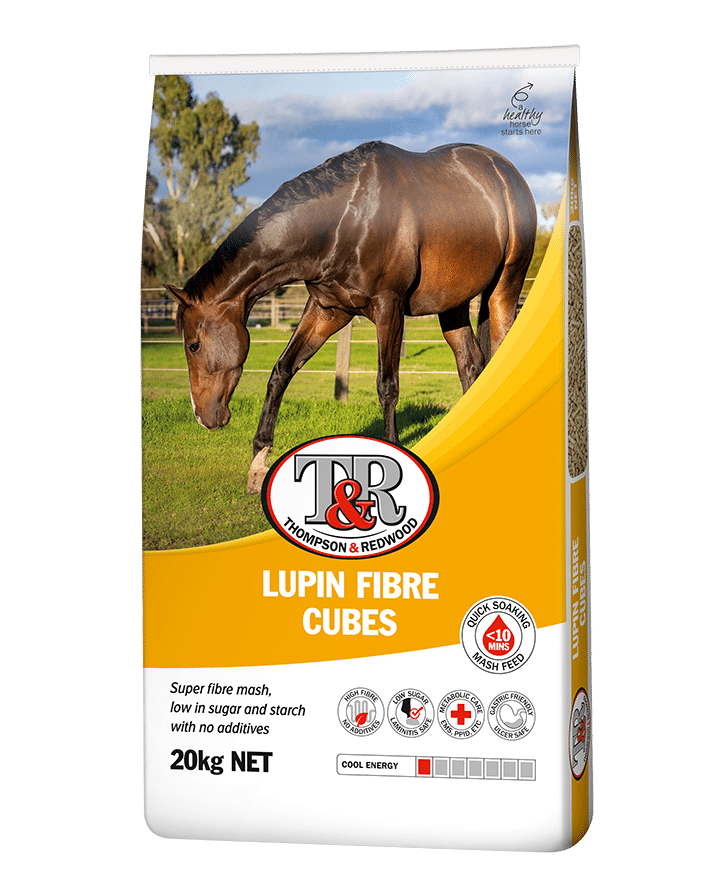
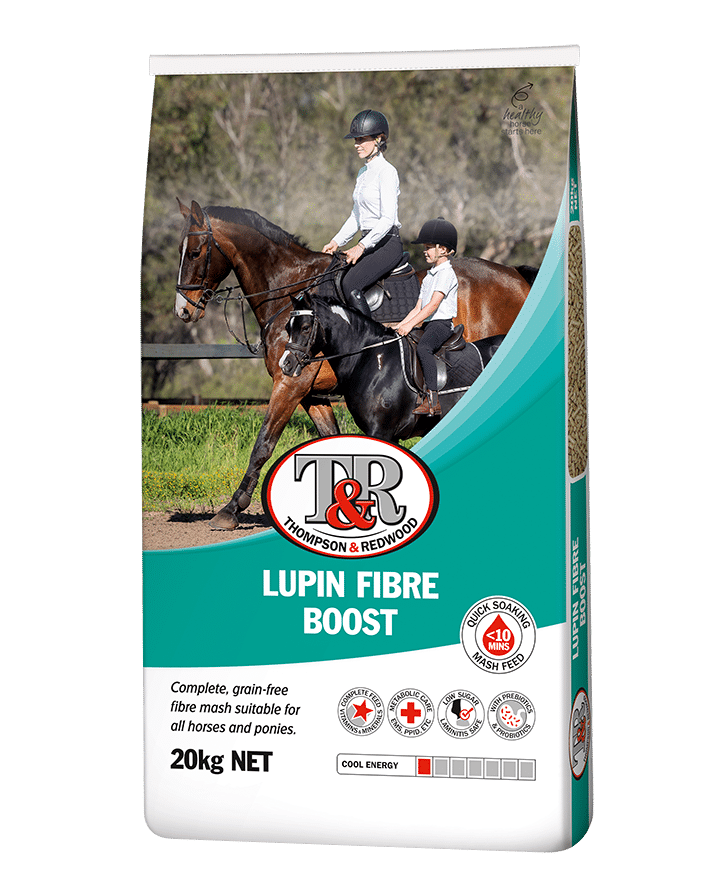
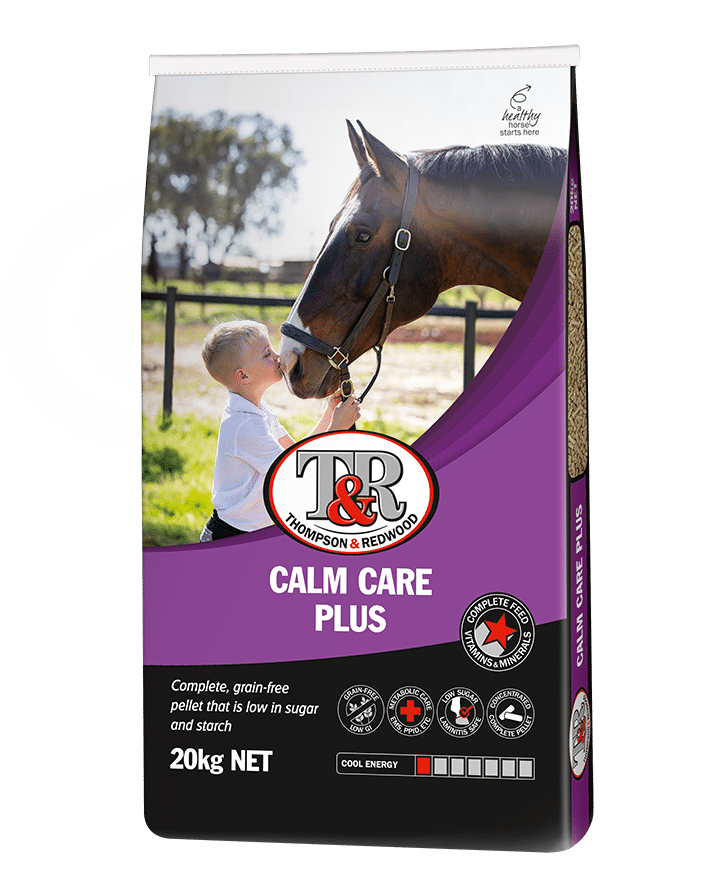
Lupin Fibre Cubes
Fibre supplement mash made from lupin hulls
With only 5.3% NSC and no additives Lupin Fibre Cubes are a safe fibre supplement for horses and ponies prone to laminitis, metabolic conditions, grain sensitivity, gut issues and ulcers.
Lupin hulls are a cool, slow-release energy source, with quality protein and a prebiotic action for gut health and function.
Lupin Fibre Boost
Low calorie complete feed made from lupin hulls.
With only 4.2% NSC, Lupin Fibre Boost builds on our Lupin Fibre Cubes with a full vitamin and mineral mix, essential amino acids and pre and probiotics added to make a safe complete feed for horses and ponies prone to laminitis, metabolic conditions, grain sensitivity, gut issues and ulcers.
Calm Care Plus
Complete, concentrated pellet with elevated nutrients
With only 5.3% NSC, Calm Care Plus provides cool, slow release energy, proteins and highly in digestible fibre with elevated nutrients, antioxidants and pre and probiotics to support horses and ponies across a range of workloads and disciplines.


No Comments